
How to Treat Constipation in Kids Naturally
Constipation is common in children and, in most cases, it is not caused by a medical disease but by habits, routines, and how the body is functioning. Pediatric pelvic floor therapy takes a gentle, whole child approach to treating constipation naturally by addressing diet, hydration, toileting routines, movement, and pelvic floor muscle coordination. Through strategies like improving fiber and fluid intake, creating consistent bathroom habits, optimizing toilet positioning, and retraining the pelvic floor muscles, many children can achieve more regular and comfortable bowel movements without relying solely on laxatives. With the right support, constipation can improve and children can return to healthy, confident bowel habits.
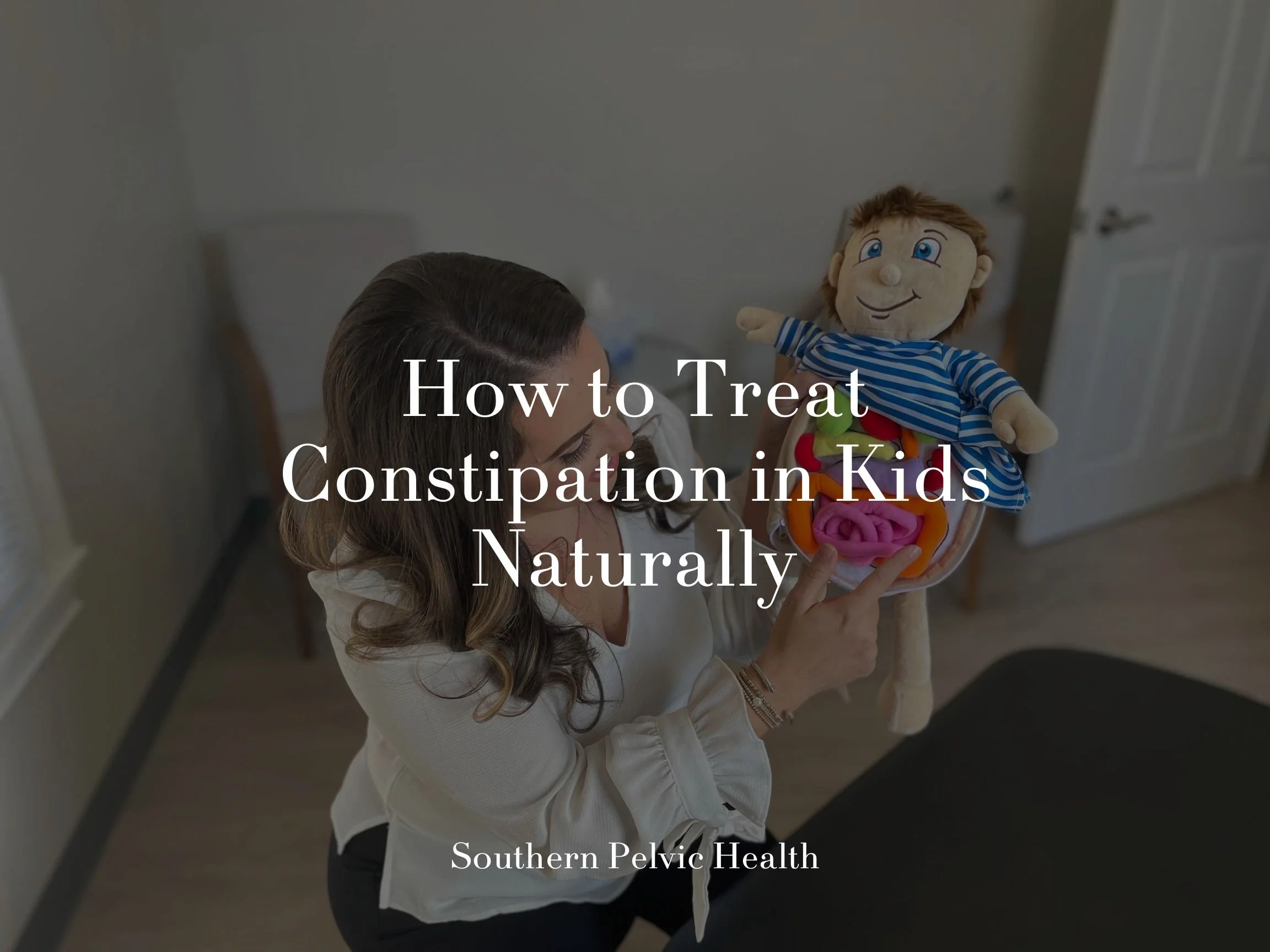
Let's dive in.
Constipation is a major problem in children.
Research tends to indicate that somewhere between 15-30% of children deal with constipation, and pediatricians are often sought out by parents to begin seeking help.
Constipation can occur for a variety of reasons, but in children, around 83% of cases are considered “functional” –meaning, that it’s most likely caused by a combination of behavioral factors, body changes, and habits – vs. being caused by a specific pathology.
This is good news in my opinion, because many of these things are factors parents can easily change to support children getting more regular bowel function!
Often times, when parents first seek medical help for their children dealing with constipation, osmotic laxatives are the first line of treatment. This can make sense, as around 92% of children with constipation deal with harder and dry stool.
Additionally, getting the stool moving is a top priority– if kids remain constipated, the rectum can become distended and overstretched, which can lead to problems like difficulty sensing stool and bowel accidents (encopresis).
That being said, many parents are hesitant to begin laxative therapy, and prefer to try natural methods for helping children improve their bowel movements and prevent constipation.
So, what are some options for treating constipation in kids more “naturally?”
There are many different ways to help kids relieve constipation and make stool easier to pass. Let's talk about a few home remedies for constipation as well as professional options, like pediatric pelvic floor therapy.
Dietary changes can be an easy first step.
I often encourage parents to start simply with making a goal for fresh fruits and vegetables. This can be an easy way to get more fiber rich foods in the diet. Apples and pears are great options!
Fluid is also important (the colon recycles around 70% of the fluid that comes through!). Drinking plenty of water (which can be tough for older children and younger children), is important.
I know fiber can seem so basic– but the reality is that research shows that a lower fiber diet is common in kids with constipation.
So, it’s basic, but it often does really help! Additionally, some research has shown that children can be sensitive to cow’s milk- and this has been identified as constipation-causing in some children.
Could be worth exploring to see if it’s a factor for yours!
Create a consistent toileting routine.
Build a routine around activities that stimulate the bowels to move– this includes physical activity and eating/drinking (especially hot fluids and foods).
You can then time toilet “sits” after meals and playtime.
When sitting on the toilet, use a stool like the squatty potty to open the anorectal angle and improve ease of emptying and passing stool.
Encourage your child to sit for 5 minutes, relaxing (they can try reading a book they enjoy!) to help stimulate the bowels to move.
Consider working with a pelvic floor therapist who has advanced training in pediatrics.
There are so many other helpful strategies we can provide to promote better bowel movements in children!
This can include teaching abdominal wall massage to stimulate better movement in the colon, addressing pelvic floor muscle coordination to improve opening at the outlet, retraining the pelvic floor muscles with specific exercises and/or SEMG biofeedback therapy, and much more!
A multicenter RCT (5–16 years) found pelvic physiotherapy plus standard medical care (education, toilet training, laxatives) achieved treatment success (no longer meeting Rome criteria for Constipation) in 92.3% vs 63.0% with standard care alone; global perceived improvement was 88.5% vs 33.3%!
These are exciting numbers and highlight the significant role pelvic floor therapists can play in helping kids with constipation.
Where to find pediatric pelvic floor therapy for constipation in Atlanta and Marietta
If you are struggling with constipation in your family, know that you’re not alone!! There is so much that can be done to support your child to better bowel health!
Our Pelvic Health Experts specialize in treating children and adolescents.
Our pediatric pelvic therapy program is the largest in the state of Georgia and we’d love to work with you and your child.
Written by Dr. Jessica Reale
Dr. Jessica Reale, PT, DPT, WCS, is a board-certified pelvic health physical therapist and founder who specializes in treating pelvic floor conditions across the lifespan, including pediatrics, adolescents, and adults. Her clinical work focuses on bowel, bladder, and pelvic pain conditions, with particular expertise in complex and often misunderstood pelvic health diagnoses.
Dr. Reale is a nationally recognized educator in pelvic rehabilitation and has taught thousands of clinicians through advanced pelvic health coursework. She is board-certified as a Women’s Health Clinical Specialist (WCS) and remains deeply committed to evidence-based, compassionate care that supports both patients and providers within the pelvic health community.