
Constipation Treatment

Constipation Is More Than an Inconvenience and can be pretty frustrating for our patients. When It Sticks Around, It Can Affect How You Eat, Move, Sleep, and Feel Every Day.
If you have tried more fiber, more water, and every over-the-counter option and still feel stuck, you are not alone. For many people, constipation is not only about diet. The pelvic floor muscles play a big role in how well your bowels empty, and when they are not working in sync, relief can feel out of reach.
We partner with you to find the root of the problem and build a plan that gets you long-term results, not just short-term fixes.

How It All Connects
Your pelvic floor muscles wrap around the rectum and help control when stool stays in and when it comes out. To have a bowel movement, these muscles need to relax and lengthen while your abdominal muscles gently help push. When that coordination is off, stool can have a hard time leaving the body, even when it is soft.
Why Bowel Dysfunction Happens
Constipation can come from many places: diet, hydration, activity level, medications, stress, hormone changes, pregnancy and postpartum recovery, or a slow-moving gut. It can also happen when the pelvic floor muscles are tight, overactive, or contract instead of relax during a bowel movement. Long-term straining can then make symptoms worse over time.
Symptoms you may Be experiencing
Some of the common constipation symptoms we help treat:
Hard, dry, or lumpy stools
Straining during bowel movements
Feeling like you didn't fully empty
Needing to press or splint to empty
Fecal urgency
Rectocele
Rectal prolapse
Anismus
Dyssynergic defecation
Pain with defecation
Abdominal and pelvic pain
Bloating and abdominal discomfort
Pediatric constipation

At SPH, we always aim to treat the whole person. We start with a comprehensive examination to determine what is happening around the body and within the pelvis that may be contributing to the problems you are experiencing. We also evaluate very specifically at the pelvic floor muscles and the structures around them to help you determine the best course of treatment for you.
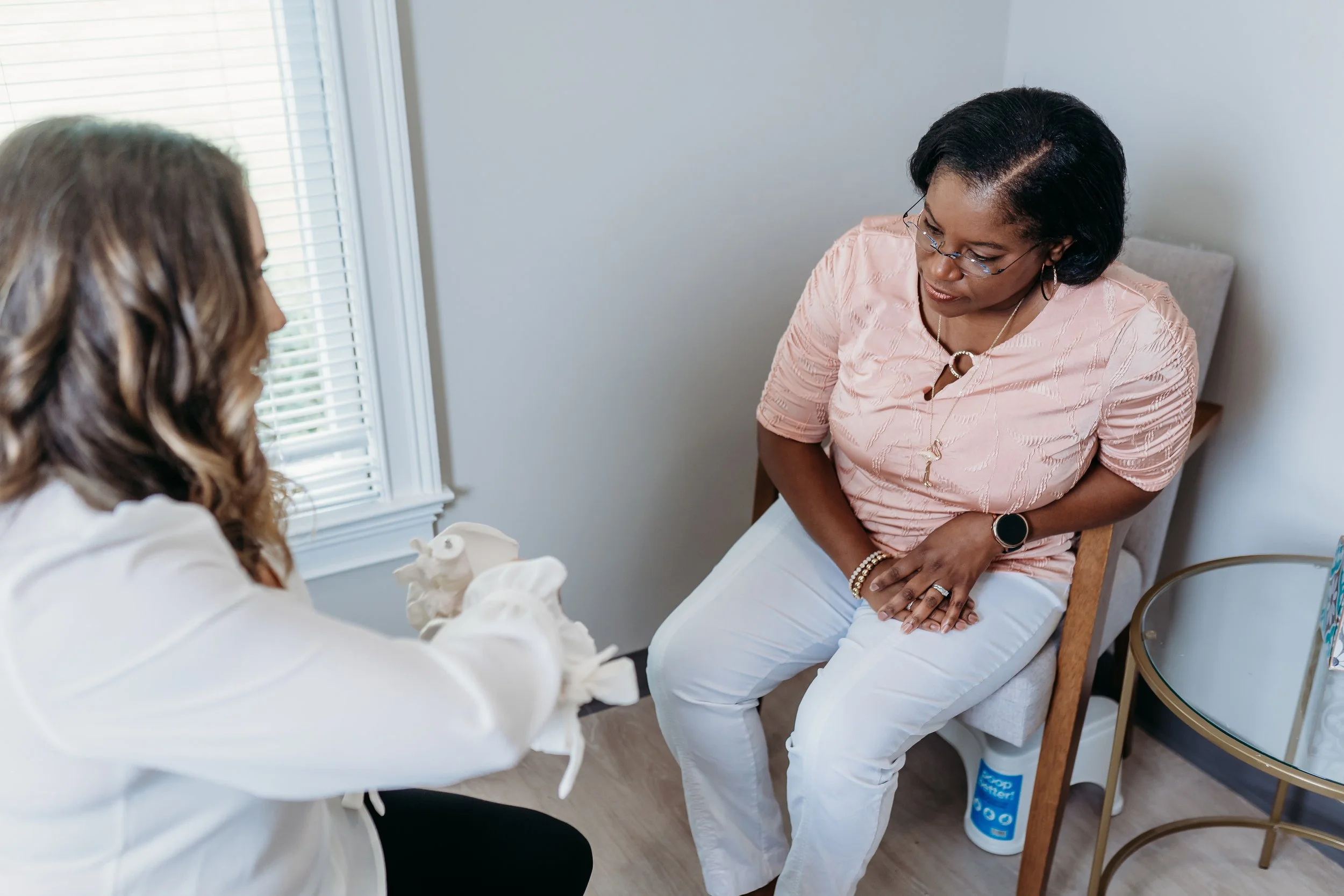
Your first visit starts with a thorough conversation about your bowel habits, diet, stress, medical history, and daily routine. We then look at how you breathe, move, and use your core, and we evaluate the pelvic floor muscles directly to see how well they relax and coordinate.
From there, we explain what we found in plain language and build a plan that fits your body and your life.
Our Expert Physical Therapists Are Here to Help
Treatment Typically Includes
-
Specific exercises aiming to improve strength and optimize coordination for the pelvic floor muscles and the structures around the pelvis.
-
Specific exercises to retrain the coordinated and automatic function of your pelvic floor muscles and retrain your deep core function.
-
Manual therapies if needed, including myofascial release, visceral mobilization, and/or dry needling to help improve muscle length and sensitivity around the pelvis.
-
Education to build strategies to optimize your bowel health and habits, including education regarding bowel health and habits, toilet positioning, defecation strategies and more.
-
Postural retraining and specific strategies to improve your body mechanics and movement.
-
Much more ~ customized to you and what we identify together in your first visit and examination.
We also have the capacity to utilize tools and modalities like surface-EMG biofeedback, intrarectal balloon training, or electrical stimulation if needed for your program.
We Are On Your Side
Have Questions About Constipation Treatment? We Are Here To Help.
-
Yes. When constipation is linked to how the pelvic floor and core muscles work, pelvic floor physical therapy can help retrain those muscles so emptying becomes easier and more complete.
-
Fiber helps soften and bulk stool, but it cannot fix a pelvic floor that tightens instead of relaxing. If stool is soft and still hard to pass, muscle coordination may be part of the picture.
-
From pregnant moms struggling with back pain, to children dealing with constipation, to athletes limiting their activities due to bladder leakage, we are there to find the root cause of the problem and partner alongside our patients to build a comprehensive solution. At Southern Pelvic Health we restore hope, promote wellness, and empower people!
-
We are always happy to partner with your other healthcare providers in your care. If you have a physician referral, please upload it within your online portal, or bring it to your first appointment.
If you do not have a referral, we are still able to see you for your initial evaluation! The state of Georgia has direct-access for physical therapy, meaning that you are able to seek out physical therapy without a referral by a physician. However, in order to continue physical therapy, you are required to have a physician referral within 21 days from your initial appointment.
-
This really varies so much for each patient! You provider will discuss this in detail with you at your initial evaluation, once they have a chance to discuss your symptoms and evaluate you.
Ready to schedule? Get started here. -
After scheduling your first appointment, you will have the opportunity to complete initial intake paperwork. This will include a health and history questionnaire which will give you an opportunity to share your story with us. This allows us to tailor your initial evaluation to address the problems that are important to you.
When you arrive for your visit, you will be taken to a private room where we will discuss in detail your history, current difficulties, and goals for treatment.
After this, we perform a comprehensive examination, which includes a movement and postural analysis, and also more specific examination techniques based on your individual case.
From here, we recommend a treatment program and make appropriate referrals if necessary to help you move forward in your journey.
For more details on the first visit and what to expect, check out this blog post by Dr. Jessica Reale on “Your first visit to see a pelvic PT.”
-
Whatever you would like! Dress comfortably, but nothing special is required.
-
We are happy to work with out-of-town patients. We have worked with patients around the country and internationally to provide consultation and treatment for their pelvic health complaints.
-
We strive to provide the highest quality of care for our patients and see all of our patients privately, one-on-one. In order to provide this level of care, we have chosen not to contract with insurance companies. We accept payment at the time of service. We accept all forms of payment, including flexible savings and health savings accounts. We are happy to work with all of our patients to determine their plan, including frequency of appointments, based on their needs.
That being said, you may be able to receive reimbursement from your insurance company based on your “out of network” benefits. If this is of interest to you, you can obtain information regarding your coverage by contacting your insurance company and requesting information regarding coverage for “out of network physical therapy.” We are also happy to provide you with a superbill (itemized document) which has the necessary information to submit to your insurance company. Seeking and obtaining reimbursement for services is the sole responsibility of the patient.
Our patient care coordination team is here to help answer any questions and provide assistance. Let’s Connect
-
It is when the pelvic floor muscles contract or fail to relax while you try to have a bowel movement. It is common, often missed, and very treatable.
More Resources For Navigating Bowel Dysfunction


★ ★ ★ ★ ★
All of the staff and Doctors have always been great. Always listen to my concerns and take the time understand all my issues. Would highly recommend.